
1Spatial World Tour 2026: Key Highlights & Takeaways
1Spatial World Tour 2026: Key Highlights & Takeaways
The 1Spatial World Tour 2026 has officially wrapped and what a series it was.
This year marked our biggest tour yet, bringing together over 550 delegates across Australia and featuring more than 27 customer presentations. From powerful real-world use cases to deep dives into the latest FME innovations, the tour highlighted just how rapidly the geospatial and data landscape is evolving.
Under the theme “Got You Covered”, the series focused on helping organisations achieve complete coverage in their geospatial workflows, from data quality to compliance and automation.
Like an umbrella shielding you from unexpected weather, 1Spatial showcased how the right tools and expertise can ensure nothing is left uncovered in your data ecosystem, keeping projects running smoothly, rain or shine.
Throughout the tour, we explored practical strategies and innovations designed to give organisations confidence in their data, no gaps, no uncertainty, just trusted, reliable outcomes.

The Big Theme: AI in FME
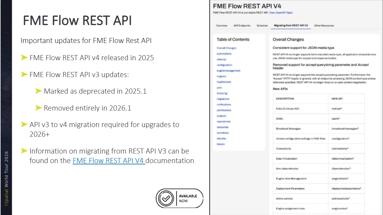
Without a doubt, the standout topic across every stop was AI.
Attendees consistently highlighted:
- AI Assist in FME Workbench
- AI-driven workflow automation
- Reading and transforming unstructured data (e.g. geotechnical PDFs)
- Integration of AI with existing FME processes
The strong interest shows a clear shift: Organisations are moving from automation to intelligent automation.
And this aligns perfectly with the broader “Got You Covered” theme. AI is rapidly becoming the layer that ensures more complete coverage across data pipelines, helping identify gaps, process previously unusable data, and enhance decision-making with greater speed and accuracy.
As also explored in a recent blog by Zinnia, AI Assist in FME Workbench has quickly become one of the most talked-about features, helping users build workflows faster, troubleshoot in real time, and interact with FME in a more intuitive way.
FME 2026 – What’s New
Another major highlight was the excitement around FME 2026.1.

Popular features included:
- New functionality and performance improvements
- Enhanced data validation tools
- Workflow automation improvements (including looping and MCP capabilities)
- Stronger integrations with platforms like VertiGIS and ESRI
For many attendees, particularly those upgrading platforms, this release unlocks significant new capability.
Real-World Use Cases That Inspired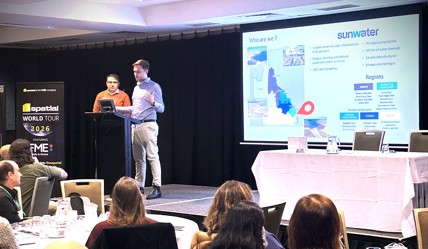
Across the presentations, several clear themes emerged, reflecting how organisations are evolving their approach to data and decision-making. A strong focus was placed on the growing importance of trusted data, ensuring accuracy, consistency, and governance as a foundation for everything from operational efficiency to strategic planning. There was also a notable emphasis on automation and scalability, with many discussions highlighting how teams are moving beyond manual processes toward smarter, repeatable workflows that reduce risk and improve speed.
Another standout theme was the integration of geospatial intelligence into broader enterprise systems, demonstrating how location data is increasingly being embedded into everyday business and government operations rather than treated as a niche capability. Presenters also underscored the shift toward real-time insights, with organisations aiming to move from reactive reporting to proactive, predictive decision-making.
Finally, collaboration and interoperability featured prominently, with a shared recognition that value is unlocked when data can move seamlessly across platforms, departments, and stakeholders. Together, these themes point to a broader transformation: from managing data as a technical requirement to leveraging it as a strategic asset driving innovation, resilience, and better outcomes.
Automation & Integration in Practice
Another strong theme was end-to-end automation and data integration.
Attendees showed strong interest in:
- Data virtualisation and data lakes
- Integration across multiple platforms
- Automating asset and infrastructure workflows
- Transforming legacy datasets into usable insights
The takeaway: Organisations are increasingly focused on connected, automated data ecosystems.
Knowledge Sharing & Community
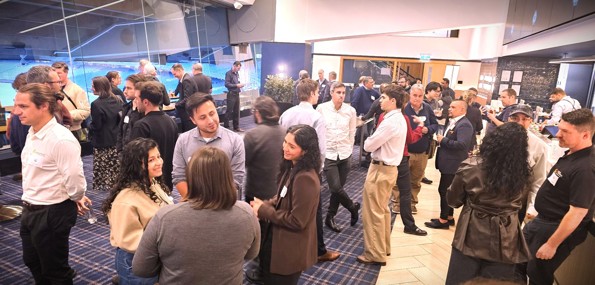
Beyond the technology, what made the tour special was the community.
From first-time users to experienced FME experts, the sessions sparked:
- New ideas and innovation
- Practical problem-solving approaches
- Stronger collaboration across industries
Feedback consistently highlighted the value of:
- Learning from peers
- Seeing real-world examples
- Understanding how others are using FME in different sectors
What This Means Moving Forward
The 2026 tour highlighted three clear trends:
- AI is now front and centre - Not experimental—embedded into everyday workflows
- Automation is evolving - From simple processes → intelligent, scalable solutions
- Real-world use cases drive adoption - Seeing practical applications is what builds momentum and confidence
Thank You
A huge thank you to all our presenters and attendees who made this year’s tour such a success. Your insights, stories, and engagement are what make the 1Spatial community so impactful.
What’s Next?
The conversation doesn’t stop here. We’ll continue sharing:
- Webinars (including FME 2026 features, AI, and accelerators)
- Case studies and customer success stories
- Insights into emerging technology trends
Contact us
Missed the event or want more details? Get in touch with the team to access slides, resources, or continue the conversation.
Contact Us